For more than 50 years, Thomas R. Butler, Inc. has delivered high-quality commercial construction and custom residential builds and remodels throughout California’s Central Valley.
Expert perspectives on commercial construction and tenant improvements as well as multi-family home and custom residential builds across the Central Valley.
For more than 50 years, Thomas R. Butler, Inc. has delivered commercial and industrial construction, tenant improvements, multi family projects, and custom residential services throughout California’s Central Valley.
From early planning through final completion, Thomas R. Butler, Inc. provides the expertise and hands-on leadership needed to deliver successful construction projects across California’s Central Valley.
Multi-Family Construction in Fresno: What Property Owners and Developers Need to Know
Multi-Family Construction in Fresno: What Property Owners and Developers Need to Know
August 7, 2026
Fresno's rental market has been growing for years, and that growth shows no signs of slowing. Between population growth in the Central Valley, rising home prices pushing more residents toward renting, and steady demand near Fresno State, Clovis, and the Highway 41/99 corridors, multi-family housing has become one of the most active construction sectors in the region.
For developers, property owners, and investors, that opportunity comes with a lot of moving parts including entitlements, site work, design coordination, financing timelines, and a construction partner who actually understands how apartment and multi-family projects are supposed to come together.
At Thomas R. Butler, Inc., we've been building in the San Joaquin Valley since 1967. As a family-owned general contractor now in its third generation, multi-family construction has been part of our core work throughout that history, alongside our commercial and custom home projects. This guide covers what multi-family construction actually involves, what affects cost and timeline, and the questions we hear most often from owners and developers.
What Counts as "Multi-Family" Construction?
Multi-family construction covers any residential project designed to house more than one family unit under a shared structure or property. In and around Fresno, that typically includes:
Garden-style apartment communities: The most common multi-family product in the Central Valley, usually 2–3 stories with surface parking
Townhome and rowhome developments: Attached units with individual entries, often used for for-sale or build-to-rent projects. Silver Springs Estates in Fresno is a hybrid duplex-townhome and single-detached-home rental community, designed for renters who specifically want to avoid a typical multi-unit apartment building.
Mixed-use buildings: Ground-floor retail or office space with residential units above, increasingly common in Fresno's infill and downtown-adjacent areas
Duplex, triplex, and fourplex properties: Smaller-scale multi-family, often built by individual investors or infill developers
Senior and affordable housing communities: Multi-family projects built to specific density, accessibility, and funding requirements
Each of these comes with different site planning, code, and financing considerations, which is why choosing a contractor with direct multi-family experience matters as much as choosing the right architect or lender.
What Affects the Cost of a Multi-Family Project in Fresno?
There's no single per-unit number that applies across the board, but the major cost drivers on most Fresno-area multi-family projects are consistent:
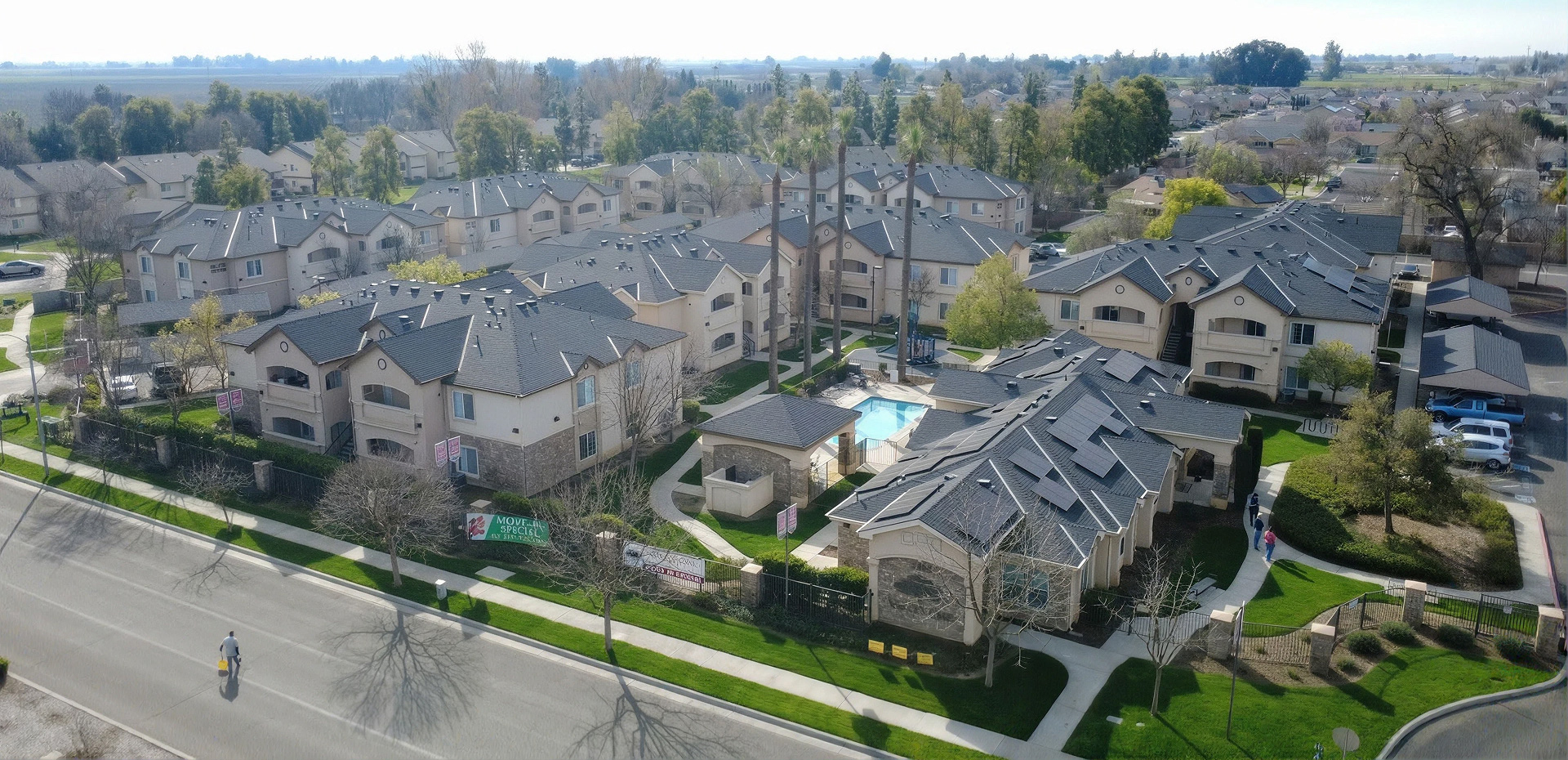
Site conditions: Grading, soil quality, drainage, and utility access can add significant cost before a single unit is framed, especially on infill lots or sites with existing improvements to demolish. On our Valley Oak Apartments project, for example, mature oak and palm trees already on the site were incorporated into the final design rather than removed, adding planning considerations up front but creating an established neighborhood feel from day one.
Unit count and density: Higher-density projects (structured parking, taller construction, elevator requirements) cost more per square foot than garden-style, surface-parked communities.
Local entitlements and impact fees: Fresno and surrounding jurisdictions (Clovis, Madera, unincorporated Fresno County) each have their own fee schedules, parking requirements, and approval timelines that affect the overall budget.
Material and finish level: Market-rate versus affordable/workforce housing product carries different finish expectations, which affects cost per unit.
Amenities: Pools, clubhouses, fitness centers, and covered parking structures add cost but are often necessary to compete in the local rental market. Nearly every multi-family project we've built, from Tollhouse Crossing to Briarwood to Valley Oak, has included a recreation building, pool, or similar amenity package because that's what it takes to compete for renters in this market.
Current material and labor pricing: The Central Valley has seen material and skilled-labor costs shift significantly in recent years, which is why early, realistic budgeting matters more than ever.
Typical Multi-Family Project Timeline
While every project is different, most multi-family developments in the Fresno area move through these phases:
Pre-construction (2–6 months): site evaluation, budgeting, permitting strategy, and value engineering before ground is broken
Entitlements and permitting (varies widely by jurisdiction): can run from a few months to over a year depending on zoning, environmental review, and the specific city or county
Site work and foundations (1–3 months): grading, utilities, and foundation work
Vertical construction (6–18 months): framing through finishes, depending on unit count and building type
Final inspections and certificate of occupancy: coordinating with local building departments to get units leasable on schedule
A general contractor who has worked with Fresno-area building departments before can often shave real time off the permitting and inspection phases simply by knowing what each jurisdiction expects. Tollhouse Crossing Apartments in Clovis is one example of a project that moved through this process on schedule despite zoning that would have allowed a denser, two-story layout; our team worked with the client to intentionally build single-story instead, prioritizing livability over maximizing unit count.
Why Local Experience Matters for Multi-Family Builds
Multi-family construction in the Central Valley isn't identical to multi-family construction in the Bay Area or Southern California. Soil conditions, seismic requirements, local fee structures, and even the pace of plan review differ by jurisdiction. A contractor with a long track record specifically in Fresno, Clovis, and the surrounding Central Valley brings a few practical advantages:
Established relationships with local building departments and inspectors
Familiarity with subcontractors and suppliers who can actually staff a multi-family timeline
A realistic sense of what things cost here, not in a market with a different labor pool
An understanding of the region's rental market, so design and unit mix decisions are grounded in what actually leases in Fresno
Our Briarwood Apartments project is a good illustration of what that long-term local presence looks like in practice. Built in 1985, the community has received ongoing improvements and upgrades over the decades since, work that's easier to plan and execute well when the same local contractor understands the building's history and the surrounding Central Valley market. That local knowledge, combined with the pre-construction planning that catches problems before they become expensive change orders, is where an experienced general contractor earns their fee.
Projects Across Fresno & the Central Valley
A look at the range of multi-family communities we've built in the region over the years:
Tollhouse Crossing Apartments – Clovis. Completed in 2017, this garden-style community was intentionally designed single-story despite zoning that allowed for two-story buildings and additional units. Generous green space, a dog park, enclosed single-car garages, and a recreation building with a pool, gym, and social area have kept it a sought-after property in Clovis.
Silver Springs Estates – Fresno. A hybrid duplex-townhome and single-detached-home rental community designed for families and professionals seeking medium-term housing who prefer not to live in a typical multi-unit apartment building. The concept remains in demand today, with available units consistently leasing quickly.
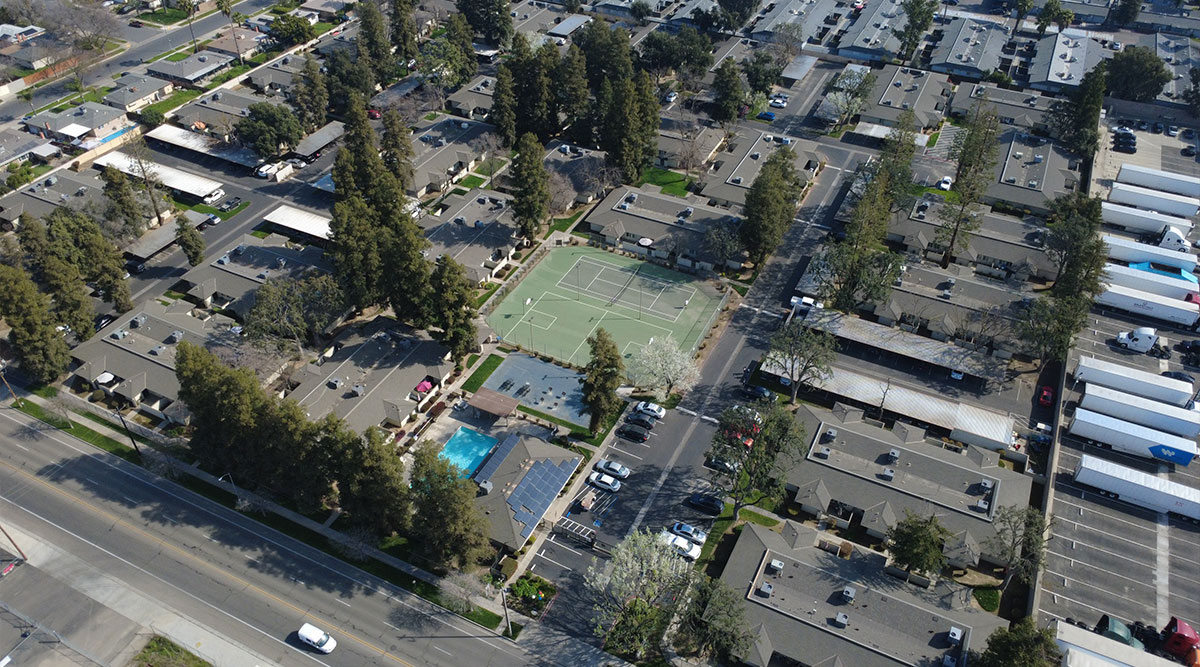
Briarwood Apartments – Fresno. Briarwood offers single-story units, mature trees, a recreation building, and a swimming pool, with north-to-south access convenient for residents working downtown or in the Madera area. The property has received ongoing improvements and upgrades over the decades.
Valley Oak Apartments – Lemoore. Built in 2008 to serve strong rental demand from Naval Air Station Lemoore and nearby production facilities, this community features a large recreation building and a pool lined with palm trees that predate the development. Mature oak trees already on site were incorporated into the design, giving the community an established feel from the day it opened.
Frequently Asked Questions About Multi-Family Construction in Fresno
How much does it cost to build a multi-family property in Fresno, CA?
Costs vary significantly based on unit count, site conditions, and finish level, but garden-style apartment construction in the Fresno area is generally a substantial per-square-foot investment once site work, permitting fees, and amenities are factored in. The most reliable way to get an accurate number is a pre-construction budget review specific to your site and program, since generic per-unit estimates rarely hold up once actual site and jurisdictional costs are applied.
How long does it take to build an apartment complex?
Most multi-family projects in the Central Valley take roughly 12 to 24 months from the start of site work to certificate of occupancy, not counting entitlement and permitting time beforehand. Larger projects, structured parking, or projects requiring extensive site remediation can take longer.
What permits are required for multi-family construction in Fresno?
Multi-family projects typically require zoning approval, a building permit, grading and drainage permits, and utility connection approvals, plus any conditional use permits specific to density or parking variances. Requirements differ between the City of Fresno, City of Clovis, and unincorporated Fresno County, so it's important to confirm the applicable jurisdiction's process early.
What's the difference between garden-style and podium-style apartment construction?
Garden-style apartments are typically 2–3 story wood-frame buildings with surface parking, and are the most common and cost-efficient multi-family product in the Fresno market. Podium-style construction places wood-frame residential units over a concrete parking structure, allowing higher density on smaller sites, but at a meaningfully higher cost per unit.
Does Thomas R. Butler, Inc. build both market-rate and affordable housing?
Yes. As a general contractor with decades of experience across commercial, multi-family, and custom residential work in the San Joaquin Valley, Thomas R. Butler, Inc. has the pre-construction and project management background to support a range of multi-family product types.
What should I look for in a multi-family general contractor?
Look for a contractor with direct multi-family experience in your specific market, a transparent pre-construction and budgeting process, established relationships with local building departments, and a track record of finishing projects on schedule. Longevity in a specific region, rather than national reach, often matters more for navigating local permitting and subcontractor availability.
Is now a good time to build multi-family housing in Fresno?
Fresno and the broader Central Valley have seen steady rental demand driven by population growth and housing affordability pressure elsewhere in California. Market timing depends on financing conditions, site availability, and individual project economics, so it's worth discussing your specific project with a local contractor and lender before finalizing a timeline.
Ready to Talk About Your Project?
Whether you're planning a small infill fourplex or a full apartment community, the earlier a general contractor is brought into the conversation, the more the project benefits from realistic budgeting and fewer surprises down the line. Thomas R. Butler, Inc. has been building in Fresno and the Central Valley since 1967. Reach out to start the conversation about your multi-family project.
Thomas R. Butler, Inc. 545 E Alluvial Ave #113, Fresno, CA 93720 (559) 275-1386 | www.trbutler.com
Whether you're planning a commercial or industrial development, tenant improvement, custom residential, or multi-family home build or remodel, Thomas R. Butler, Inc. brings decades of experience and hands-on leadership to every project.



.png)




.svg)

.svg)